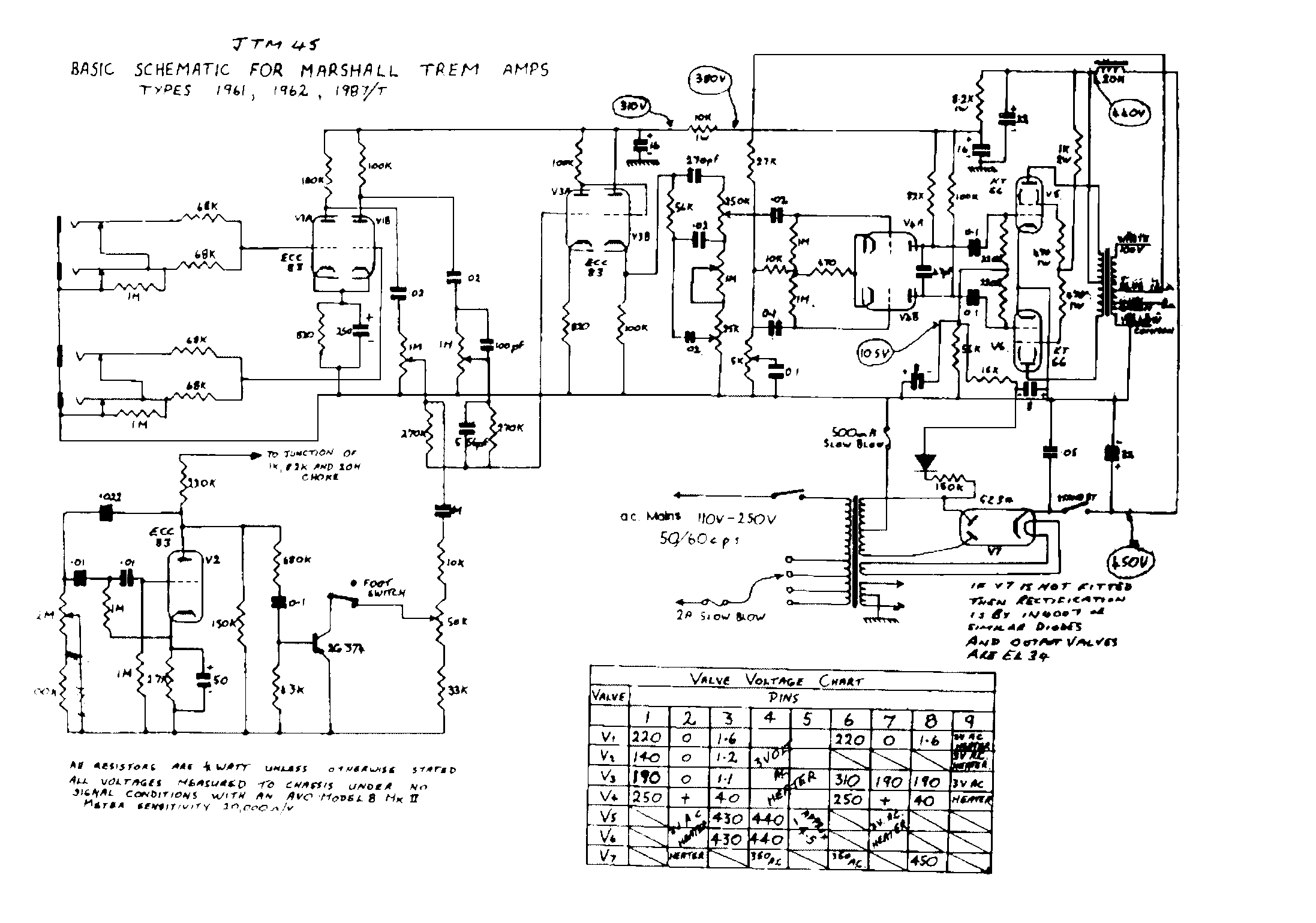
| JTM45 | 1962–1966 | 45 W | push-pull 2xKT66 | Marshall's first amplifier, built under Jim Marshall's direction and adapted from the circuit of a Fender tweed 5F6-A Bassman with higher-gain ECC83 preamp valves and added output filtering; a tube-rectified GZ34 supply. The corpus's own jtm45 entry documents the KT66-loaded variant of the model — other valve complements (5881, later 6L6GC) are reported for the same badge across its production run but are not the circuit modeled here. Sources for JTM45 (2) - Wikipedia, "Marshall Amplification" — JTM45 introduction date, naming origin (Jim and Terry Marshall + max wattage), original valve choice, and the Fender Bassman derivation — en.wikipedia.org
- Marshall factory drawing 'Basic schematic for Marshall trem amps, types 1961, 1962, 1987/T' — same schematic already read for the corpus's jtm45 circuit entry; confirms the 3xECC83/2xKT66/GZ34 complement dated to this era — www.drtube.com
| JTM45 circuit ↗ |
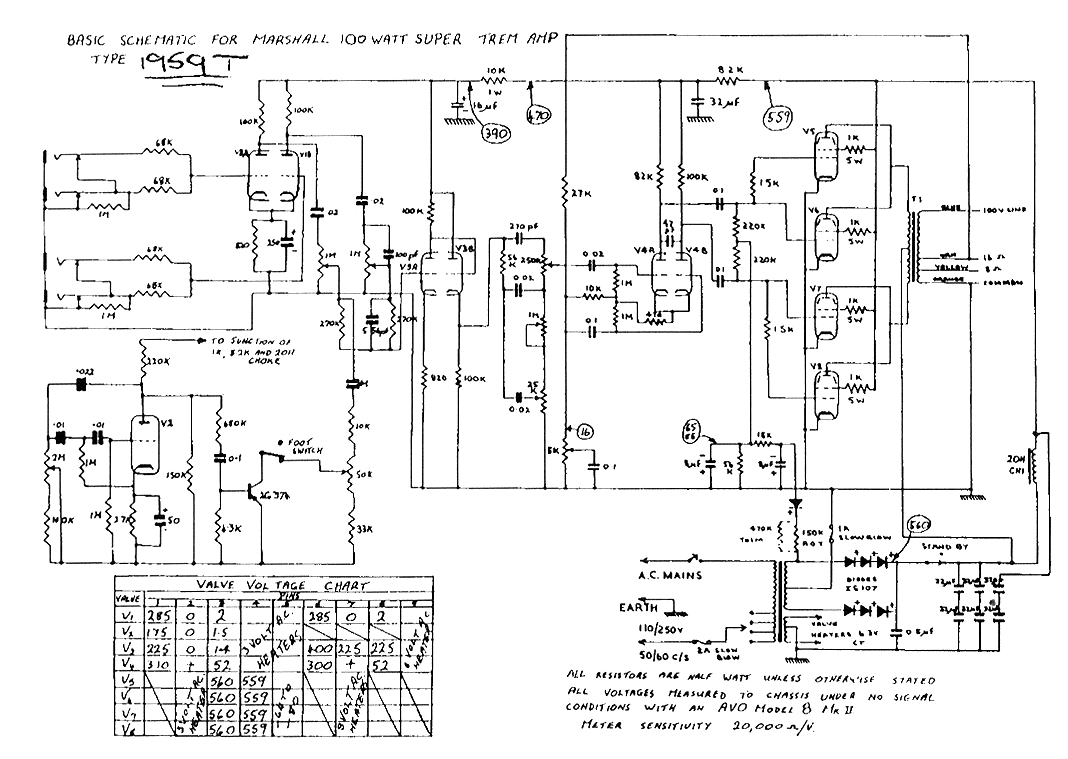
| JTM100 | 1965–1966 | 100 W | push-pull 4xKT66 | Built for players who wanted more clean headroom than the 45-watt head could give; Marshall doubled the output section to four KT66s and, for the first time, dropped the rectifier valve for silicon diodes. The corpus's own jtm100 circuit entry documents a factory sheet from this window: the JTM45 front end essentially unchanged — four inputs, shared 820-ohm input cathode, DC-coupled cathode follower, 56k/270pF tone stack, long-tailed-pair inverter — ahead of four KT66s on a 560 V rail, with the 5k presence control wired in series in the inverter's tail. The 100-watt Lead and Bass heads wore left-over JTM45 panels into 1966, which is why the same amplifier is also called JTM45/100 and its rear panel reads "Super 100 Amplifier"; the 100-watt PA models, needing eight inputs, got JTM100 panels of their own. Sources for JTM100 (4) - Dr. Tube schematic-archive Marshall index — lists a distinct "JTM100" entry dated 1965-1967, ahead of the 1959-catalog-number Super Lead — www.drtube.com
- Dr. Tube JTM100 page — the 100-watt heads on left-over JTM45 panels until some time in 1966 (hence "JTM45/100"), JTM100 panels on the eight-input PA models, the JTM100s as the first Marshalls with solid-state rectifiers, and early JTM100s fitted with KT66s before EL34s; also the archive that publishes and dates the factory sheet read for the corpus's jtm100 circuit entry — www.drtube.com
- Marshall factory drawing, title block "BASIC SCHEMATIC FOR MARSHALL 100 WATT SUPER TREM AMP / TYPE 1959T" — same schematic already read for the corpus's jtm100 circuit entry; confirms the 4xECC83 (one of them the tremolo valve the plain head omits) + 4xKT66 complement, the silicon diode banks with no rectifier valve, and a printed valve-voltage chart giving 560 V plates and 559 V screens — www.drtube.com
- Wikipedia, "Marshall Amplification" — origin story for the first 100-watt heads as a special order from players wanting more than 45 watts on stage — en.wikipedia.org
| JTM100 draft ↗ |
| 1959 | 1965–1981 | 100 W | push-pull 4xKT66, later 4xEL34 | Marshall's catalog number for the 100-watt Super Lead head. Its power valves moved from KT66 to Mullard EL34 as KT66 costs rose, in the same window (mid-to-late 1960s) the corpus's own circuit entries bracket for the family: the jtm100 entry documents four KT66s already over silicon diodes on a 1966 sheet, while the m1959 entry documents a July-1970 factory drawing with four EL34s over a silicon bridge. The 100-watt head's rectifier had therefore crossed to silicon before its output valves did, and the archive that publishes both sheets records the 100-watt heads as the first Marshalls to drop the rectifier valve. The acrylic ("plexi") front panel was replaced by brushed metal in 1969, and the model picked up a "mkII" suffix and "JMP" branding after Marshall moved to printed-circuit construction in the mid-1970s. A US-market Mark II sheet of the same drawing number substitutes a 6550 output quartet for the EL34s. Sources for 1959 (3) - Wikipedia, "Marshall Amplification" — 1965 release of the 1959 Super Lead, the KT66-to-EL34 valve change (cost-driven), and the 1969 plexi-to-metal panel change — en.wikipedia.org
- Same page — 1973/1974 handwiring-to-PCB transition and the 'mkII'/'JMP' labeling added to the 1959 and 1987 amplifiers — en.wikipedia.org
- Marshall model 1959 factory drawing, Unicord drawing 70-6-11 rev B, dated July 1970 — same schematic already read for the corpus's m1959 circuit entry; confirms 3xECC83 + 4xEL34 with a silicon bridge rectifier and no rectifier valve, and the companion 'MARSHALL 1959 MARK II' sheet of the same number and date confirms the 6550-fitted US variant — el34world.com
| M1959 draft ↗ |
| JTM50 | 1966–1967 | 50 W | push-pull 2xKT66 | A 50-watt scaled-down sibling of the 100-watt Super Lead, indexed under this name in schematic-archive era charts just ahead of the "1987" catalog number being applied to the same wattage class in 1967. Sources for JTM50 (1) - Dr. Tube schematic-archive Marshall index — lists "JTM50" dated 1966-1967, immediately preceding the JMP-era catalog numbering — www.drtube.com
| history entry Open requests for JTM50 ↗ Suggest research for JTM50 ↗ |
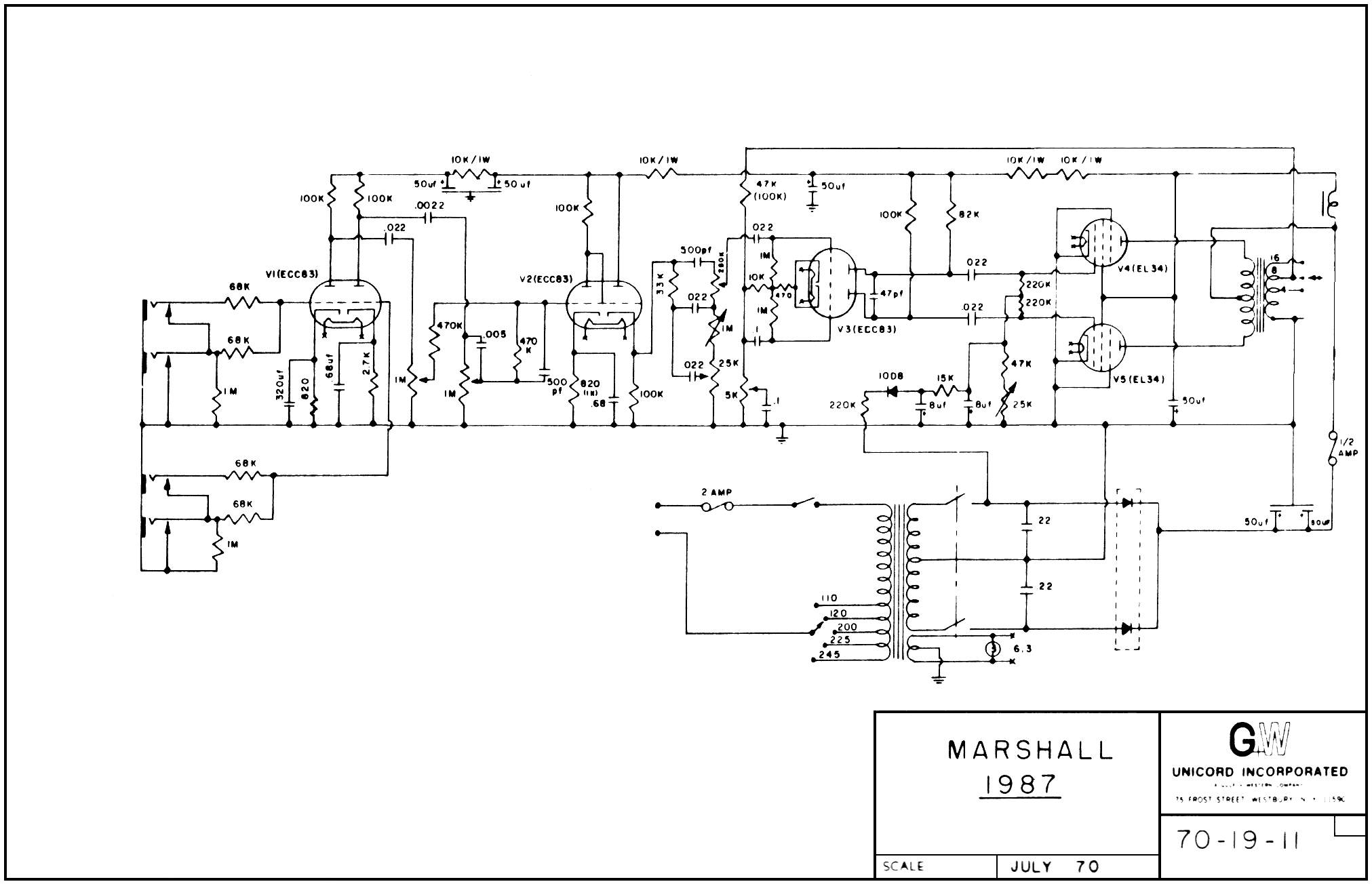
| 1987 | 1967–1981 | 50 W | push-pull 2xEL34 | Marshall's 50-watt counterpart to the 1959 Super Lead, released in 1967 already on EL34 output valves. The corpus's own m1987 circuit entry documents a July-1970 factory drawing with a fully solid-state full-wave rectifier — no rectifier valve — continuing the same cost/reliability-driven shift away from tube rectification seen on the 100-watt head. Like its 100-watt sibling it went from acrylic to metal front panel in 1969 and picked up "mkII"/"JMP" branding once Marshall moved to printed-circuit construction in the mid-1970s. Sources for 1987 (2) - Wikipedia, "Marshall Amplification" — 1967 release of the 1987 model as the 50-watt version of the Super Lead, and the shared 1969 panel / mid-1970s PCB-and-branding changes — en.wikipedia.org
- Marshall model 1987 factory drawing, Unicord drawing 70-19-11, dated July 1970 — same schematic already read for the corpus's m1987 circuit entry; confirms 3xECC83/2xEL34 with a silicon full-wave rectifier and no rectifier valve — www.drtube.com
| M1987 draft ↗ |
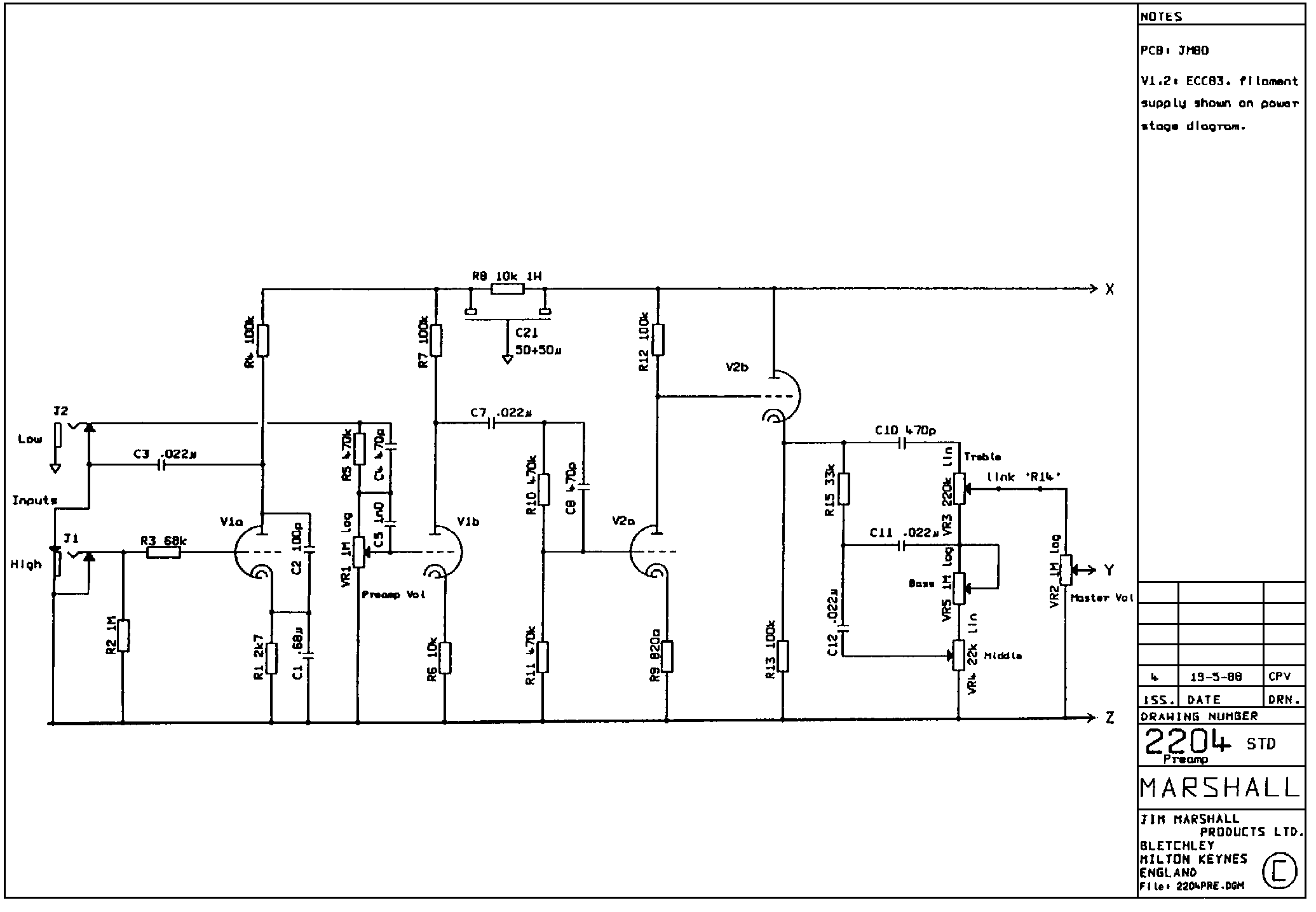
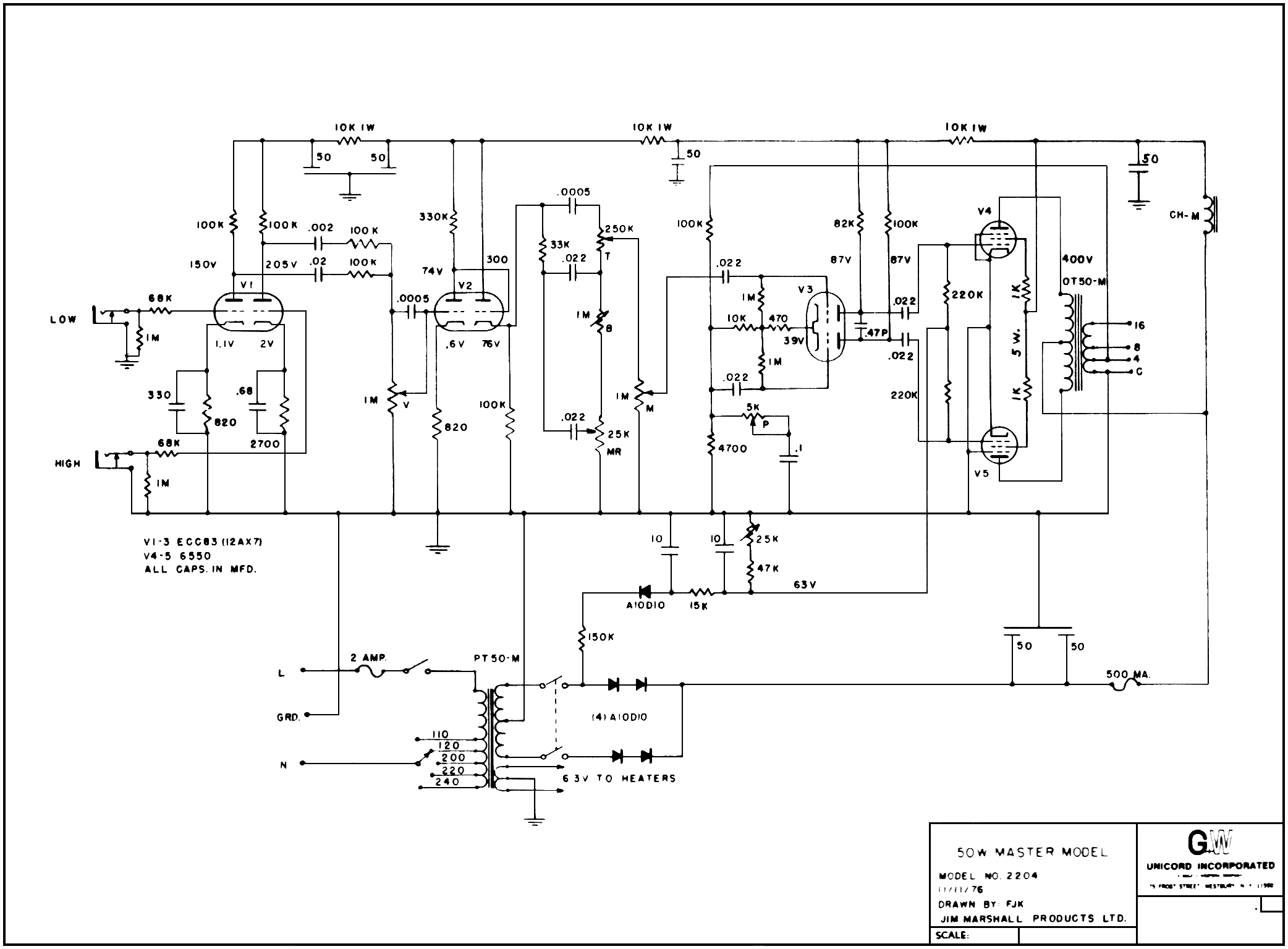
| 2204 | 1976–1989 | 50 W | push-pull 2xEL34 (6550 on US-market amplifiers) | The 50-watt head rewired for players who wanted the preamp driven hard at a bearable volume. Marshall introduced the 100-watt 2203 in late 1975 and this 50-watt 2204 in 1976, repurposing the second channel's volume control as a master volume between the tone stack and the phase inverter. The deeper change followed: the two input triodes, until then one per channel and mixed together, were connected in series with a preamp volume between them — a third gain stage ahead of the tone stack. Marshall's own drawing for the first 2204 still shows the older parallel front end, and the series arrangement reached the model in early 1977; the corpus's m2204 circuit entry documents the later, cascaded revision. In late 1980 the 2203 and 2204 were repackaged with a new cabinet and panel and sold as the JCM800 series, the circuit unchanged. Output valves were a 6550 pair on US-market amplifiers and an EL34 pair (or KT77) elsewhere. The end year above is the date of the latest factory-drawing issue read for this entry (18-6-89), not a documented last year of production — the sources used here do not pin one. This row dates the model number, which Marshall introduced in 1976. The documented circuit is the later revision, the one whose two input triodes run in series; the 1976 drawing of the same model number still wires them in parallel and fits a 6550 pair for the US market, so the circuit entry starts where that redesign does. Sources for 2204 (4) - Wikipedia, "Marshall Amplification" — the late-1975 introduction of the Master Volume series with the 100 W 2203 followed by the 50 W 2204 in 1976; the change connecting the input stages in series rather than in parallel and repurposing the second channel volume as a master volume, reaching the 2204 in early 1977; and the late-1980 repackaging of the 2203 and 2204 as the JCM800 series — en.wikipedia.org
- Marshall model 2204 factory drawing, two sheets titled '2204 STD Preamp' (file 2204PRE.DGM, issue 4, 19-5-88) and '2204 STD Output Stage & PSU' (file 2204PWR.DGM, issue 2, 18-6-89), Jim Marshall Products Ltd., Bletchley, Milton Keynes — the same drawing already read for the corpus's m2204 circuit entry; confirms 3xECC83 + 2xEL34 with a four-diode silicon bridge, the cascaded V1a-to-V1b front end with a preamp volume between them, and a master volume after the tone stack — www.drtube.com
- Marshall model 2204 factory drawing, title block '50W MASTER MODEL / MODEL NO. 2204', dated 11/11/76, drawn FJK, Jim Marshall Products Ltd. for Unicord Incorporated, Westbury NY — the first 2204 revision, showing the parallel two-channel input pair that the 1977 change replaced, and a 6550 output pair for the US market — www.drtube.com
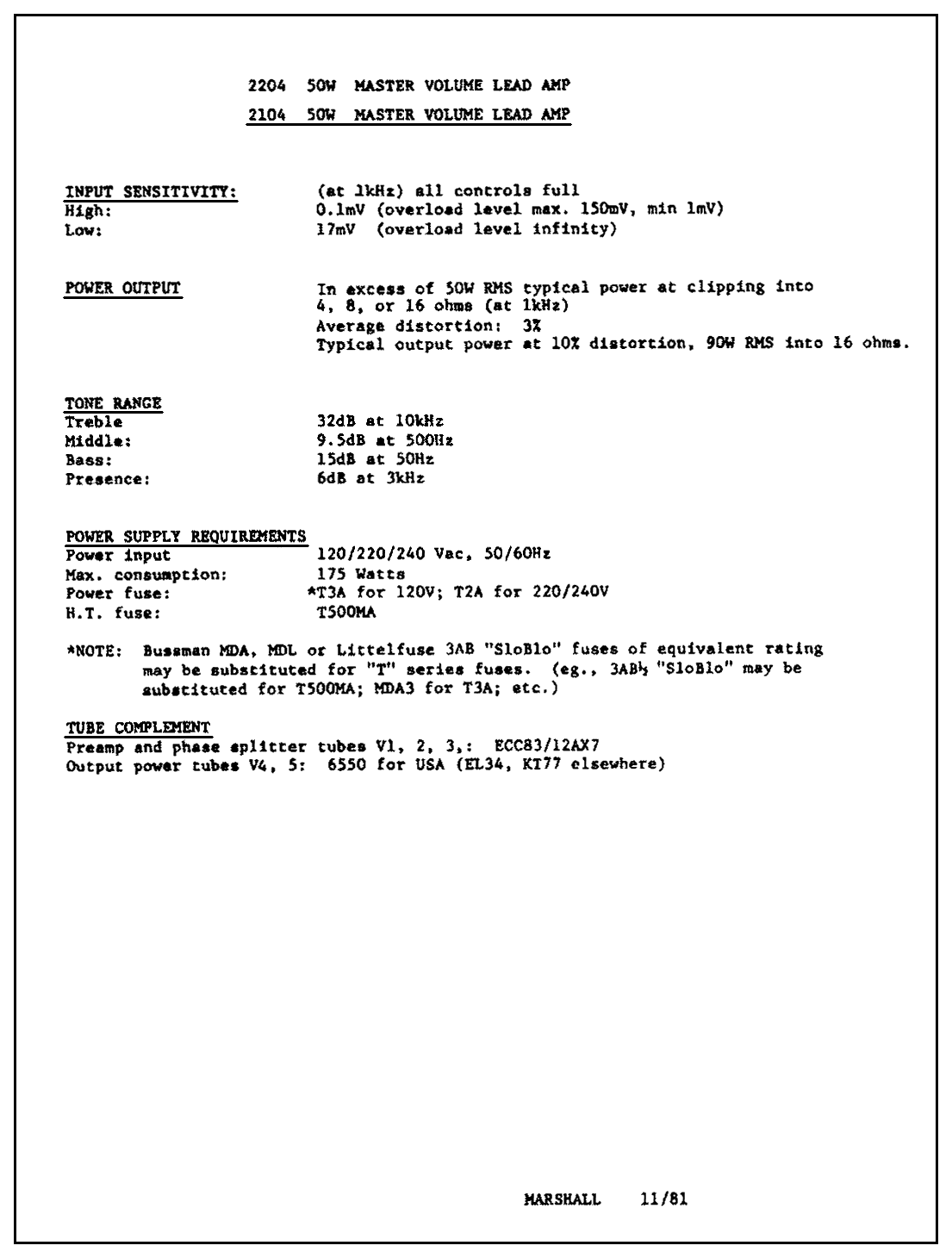
- Marshall specification sheet '2204 50W MASTER VOLUME LEAD AMP / 2104 50W MASTER VOLUME LEAD AMP', dated 11/81 — prints the output-valve fitment as '6550 for USA (EL34, KT77 elsewhere)' and rates the amplifier in excess of 50 W RMS into 4, 8 or 16 ohms — www.drtube.com
| M2204 draft ↗ |